

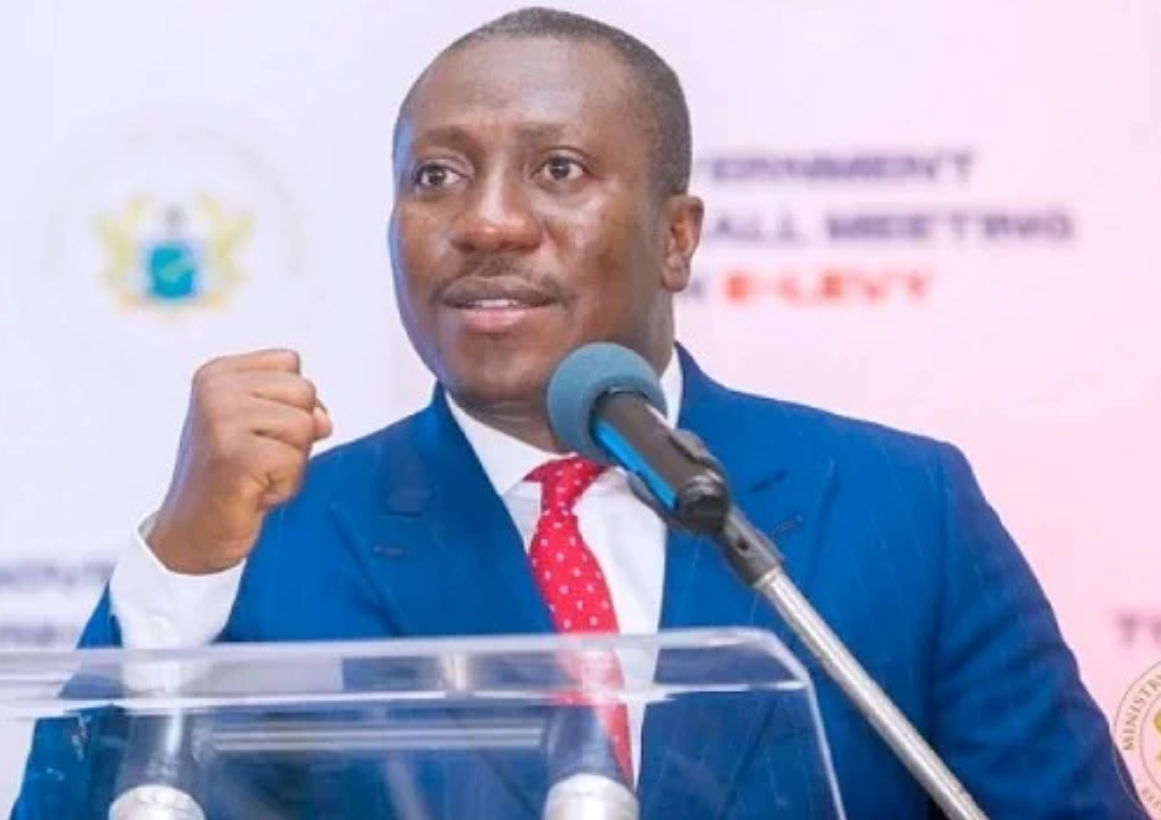

Dr. Ebo AFFUL
Alexander Afenyo-Markin’s assertion that the poor should not venture into politics, on the grounds that politics is about “giving back” to society, raises profound philosophical, democratic, and ethical questions.
While his statement may be considered as a pragmatic observation about the financial demands of political life, it risks reinforcing an exclusionary view of governance that contradicts the essence of democratic representation that we are desirous to establish in Ghana.
At the heart of the Minority Leader’s argument lies an assumption that political leadership requires prior material wealth, and that only those who already possess economic resources are best positioned to serve society. This perspective reflects a long-standing tension in political theory between elitism and participatory democracy.
Once upon a time, elitist thinkers argued that leadership should be entrusted to those with resources, education, and influence. However, modern democratic ideals emphasise inclusivity, equal participation, and representation of diverse social realities including poverty.
The suggestion that poor individuals should avoid politics because they lack the means to “give back” merge generosity with the capacity to lead. It means governance is an act of philanthropy rather than a public duty to design and implement policies that improve citizens welfare.
Effective political leadership is less about personal financial contributions and more about stewardship of public resources, policymaking, and accountability. By this logic, the ability to enact structural change, rather than dispense personal charity, should be the defining qualification for political office.
Moreover, the claim risks marginalising those voices that are most needed in policy discussions. Individuals who have experienced poverty often possess firsthand knowledge of systemic inequalities, social vulnerability, and policy gaps. Excluding them from political participation could lead to governance that is detached from the lived realities of a significant portion of the population.
In this sense, Afenyo-Markin’s stance appears to contradict the principle of descriptive representation, meaning legislative bodies should reflect the demographics and experiences of the people they serve.
There is also a deeper ethical concern embedded in the statement. By discouraging the poor from entering politics, it legitimises a cycle in which wealth becomes a prerequisite for power, and power in turn reinforces existing inequalities. This creates a “closed loop of elite capture,” where political systems are dominated by affluent individuals whose interests may not always align with those of disadvantaged groups. Over time, such a system risks eroding public trust in democratic institutions.
To be fair, the Minority Leader’s remark may reflect the practical realities of modern politics where campaign financing, constituency demands, and informal expectations place significant financial burdens on aspirants. In many political systems, such as Ghana, the high cost of campaigning and the expectation of material support for constituents can deter talented but less affluent individuals from entering politics. From this perspective, his statement could be interpreted less as a normative prescription and more as a candid reflection of systemic barriers.
However, acknowledging these barriers should lead to calls for reform not resignation. If politics has become prohibitively expensive, the appropriate response is to strengthen campaign finance regulations, promote transparency, and create pathways for broader participation. Encouraging wealth-only participation does not solve the problem. Simply put, it institutionalises it.
Additionally, the notion that politics is about “giving back” can undermine the fundamental responsibility of political office, which is to serve the public interest through quality governance. Public office, for God’s sake, is not a charitable enterprise financed by personal wealth. It is a trust conferred by citizens, backed by public resources and democratic legitimacy. Redefining politics as philanthropy erodes the role of institutions and policies, and shifts attention away from accountability mechanisms.
Considering the symbolic implications of such a statement, it needs to be noted political rhetoric plays a powerful role in shaping public perceptions and aspirations. When influential figures suggest that poverty disqualifies individuals from leadership, it risks discouraging civic engagement among young people and marginalised communities. In societies striving for social mobility and inclusion, such messaging can undermine efforts to broaden participation and deepen democracy.
Afenyo-Markin’s claim calls for a broader conversation about the political thought, passion and commitment of the political class to judiciously use our resources to build society. Should political office be the preserve of economically privileged, or should it remain an arena open to all citizens, regardless of socioeconomic status? The answer, grounded in democratic principles, leans strongly toward inclusivity.
A more constructive approach would be to recognise the value of diverse experiences in governance while addressing the systemic barriers that limit participation. Rather than advising the poor to stay out of politics, policymakers and stakeholders should work to create conditions in which all capable individuals regardless of wealth can contribute meaningfully to public life. After all, democracy is not strengthened by narrowing the pool of leadership. It is strengthened by widening it..
Post Views: 39
Discover more from The Business & Financial Times
Subscribe to get the latest posts sent to your email.