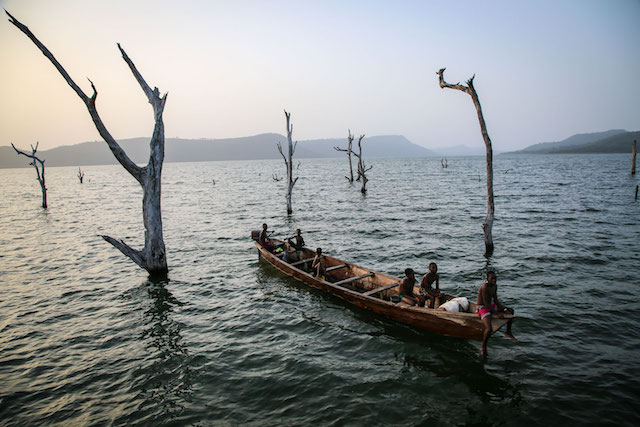
A survivor of child trafficking on Lake Volta has called on the Ghanaian government to treat funding for child protection systems as a sustained national priority, describing how coordinated investment in rescue and aftercare services transformed his own life.
Godson Glawu, now a chapter leader with the Ghana Survivor Network in Keta, shared his story at Ghana’s National Justice Conference 2026 in Accra on Tuesday, held under the theme “Sustainable Funding for Child Protection Against Labour Exploitation.”
Glawu said he was trafficked from his hometown of Keta in the Volta Region to Lake Volta at the age of seven, and forced into fishing labour for ten years, work that included diving into the lake to untangle nets without protection.
He said he endured beatings, lived in constant fear, and witnessed the death of a close friend during that period.
He said he reached a breaking point around age twelve, describing a moment of profound despair from which a stranger’s intervention helped him find hope. IJM’s Godson Glawu did not go into further detail about this moment, saying instead that turning that hope into lasting change required resources, coordination and sustained investment in child protection systems.
Glawu said he was rescued in 2015 through a police operation supported by International Justice Mission (IJM) Ghana, which he described as the result of funding, training and logistics rather than chance. He said he later entered an aftercare programme, reunited with his mother, and was supported to enrol in a technical training institute, where he studied electrical works.
He now works as a trained electrician and entrepreneur, and said he joined the Ghana Survivor Network in 2021, where he now leads community outreach in Keta, working alongside the police and the Department of Social Welfare to help prevent trafficking and protect vulnerable children.
“We need you to increase investment in child protection systems. Not as a one-time effort, but as a sustained national priority,” Glawu told government officials at the conference, calling for increased funding for police, social welfare services, survivor-led initiatives, and prevention programmes rather than response alone.
He also highlighted the contribution of Pastor Busenu Deku of Keta, who he said has opened his church to survivor leaders from the Ghana Survivor Network and personally funded radio airtime for community trafficking awareness campaigns, describing it as an example of how individual action, not just institutional funding, can strengthen protection systems.
Glawu’s testimony formed part of the National Justice Conference’s broader push for stakeholders — including government ministries, International Justice Mission and civil society groups — to translate existing legal commitments, such as Ghana’s Human Trafficking Fund, into fully resourced, lasting protection systems for vulnerable children.
DISCLAIMER: The Views, Comments, Opinions, Contributions and Statements made by Readers and Contributors on this platform do not necessarily represent the views or policy of Multimedia Group Limited.
DISCLAIMER: The Views, Comments, Opinions, Contributions and Statements made by Readers and Contributors on this platform do not necessarily represent the views or policy of Multimedia Group Limited.